Step by step
Your first Santa Muerte prayer, in five parts
A beginner's prayer does not need dramatic language or a memorised script. Marisol Vega's book offers a five-part structure that gives you something concrete to say, and room to say it honestly.
Before you begin
Why a structure helps a beginner
A first prayer is often the point where curiosity meets hesitation. You may not know how to address La Santa Muerte, how long to speak, or whether you are doing it correctly. The structure described in Santa Muerte for Beginners: Your First Prayer, Altar & Ritual answers those practical questions without pretending there is only one right way to pray.
The framework is made of five parts: a respectful greeting, specific thanks, a clear request, an optional promise, and a respectful farewell. Read together, they form a short arc that moves from attention to gratitude to asking, and then closes cleanly.
It is worth saying what the framework is not. The book presents it as a beginner’s structure, not a universal requirement. Public shrines, family traditions and private altars do not follow identical customs, and the introduction is explicit that devotees need not observe one rule.
The framework
The five parts, one at a time
- One
A respectful greeting
You begin by addressing La Santa Muerte with care rather than urgency. The greeting sets the tone for everything that follows: this is a conversation, not a transaction.
- Two
Specific thanks
Thanks are named rather than generalised. Naming something particular keeps the prayer honest and stops it from turning into a formula recited by habit.
- Three
A clear request
A request is stated plainly. Clarity matters more than eloquence, and a single focused request is easier to sit with than a list of wishes.
- Four
An optional promise
A promise, or manda, may follow the request. In the book it is optional, and it is meant to be something specific and affordable that you can actually keep.
- Five
A respectful farewell
The prayer closes with the same courtesy it opened with. A farewell marks the end of the exchange, so the practice does not blur into worry.
Part four
The promise is optional
The promise is the part beginners most often worry about. In this framework it is optional, and the book treats it as a commitment to plan rather than a price to pay. Promises, or mandas, are described as specific and affordable actions instead of escalating vows made out of fear or impatience.
That distinction matters if you are anxious about getting the prayer “right”. A request can stand on its own. If you do make a promise, it should be something you can carry out without harming your household, your budget or your peace of mind.
Read more about mandasPractical preparation
Preparing the space and the words
A prayer needs very little. A clean surface, a glass of water, a flower and a small image are enough for a first attempt, and the book discusses modest arrangements for apartments, shared homes and travel.
Before you speak, decide on one clear request. Then decide what you can consistently give: attention, gratitude, time, or a small act of care. The book invites you to consider both before asking, and to think about how you might respond if the request is not answered in the way you hoped.
What comes next
After the first prayer
The end of the prayer is not the end of the practice. The book suggests brief daily greetings, periodic care for offerings, and a monthly cleaning and review. A short record of what you asked for and what you noticed can help you keep the practice grounded rather than reactive.
If you want a structured way to record a request over a week, the candle petition worksheet on this site pairs with the seven-day candle approach described in the book. It is a companion document, not a reproduction of the author’s own log.
Reader questions
Questions about the first prayer
What are Vega's five parts of a Santa Muerte prayer?
A respectful greeting, specific thanks, a clear request, an optional promise and a respectful farewell. In Marisol Vega’s book the sequence is offered as a beginner’s framework, not a universal requirement for every devotee.
Are promises required in this prayer framework?
No. The promise is optional. Where a promise is made, the book favours a specific, affordable commitment over an escalating vow made out of fear or impatience, and it treats proceeding, waiting and learning privately as legitimate choices.
Do I need a statue before I pray for the first time?
The book describes a small statue, a printed card or a framed picture as possible first images, and a clean glass of water and a flower as sufficient offerings. A large or costly arrangement is not presented as a prerequisite.
What if my request is not answered?
The book asks you to consider how you might respond to an unanswered request before you make one. Devotion is framed as a relationship of care and reciprocity rather than a transaction that purchases an outcome, so an unanswered request does not cancel the practice.
Keep reading
Other beginner guides
- An altar for small spacesModest, portable and stored arrangements for apartments, shared homes and privacy-sensitive households.
- Offerings on a budgetWater, flowers and food considered for meaning, cost, upkeep and household practicalities.
- Mandas and promisesWhy the book treats promises as specific, affordable actions rather than escalating vows.
Start where you are
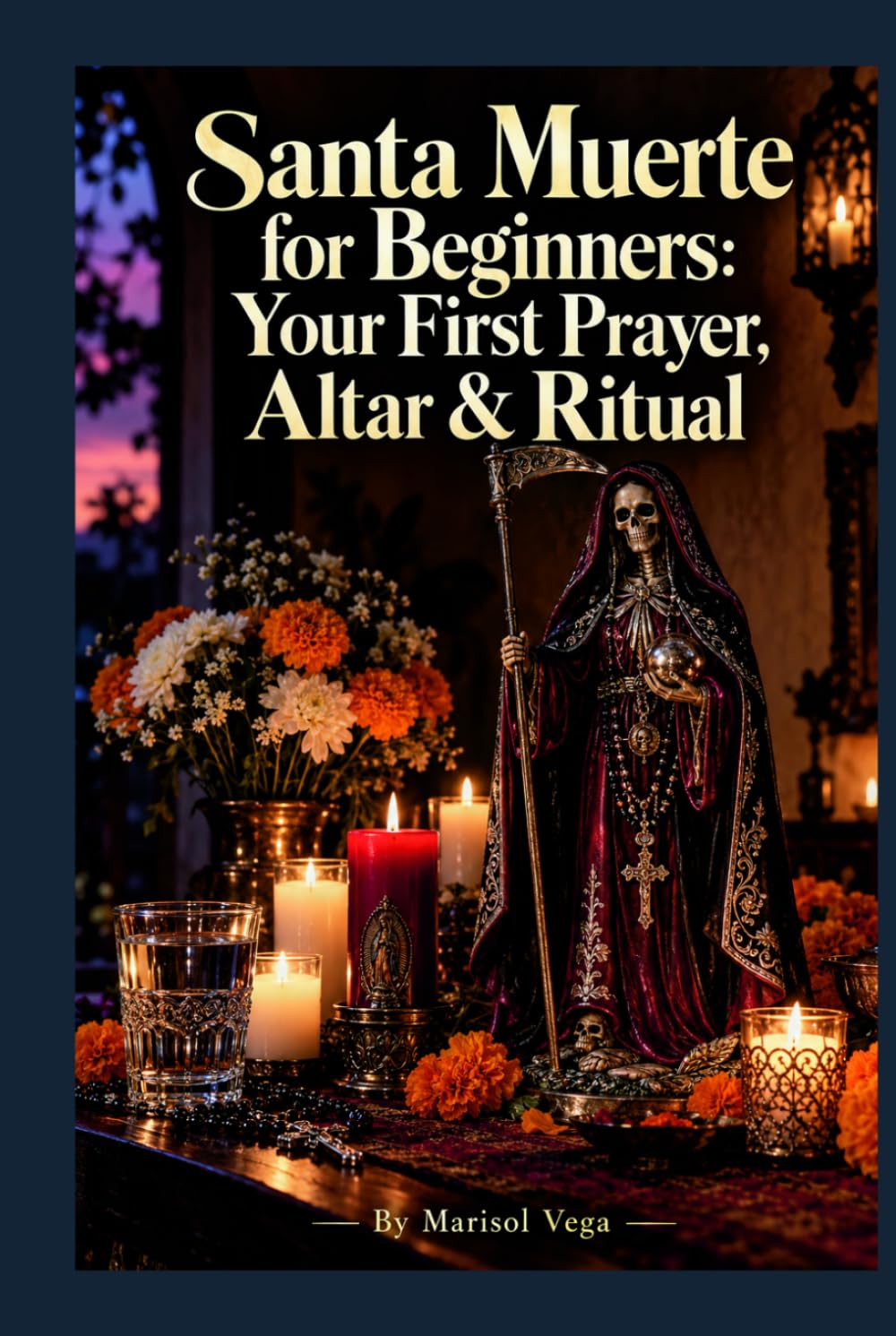
Santa Muerte for Beginners
Your First Prayer, Altar & Ritual
by Marisol Vega
If you want a grounded, unhurried place to begin, the book starts with your questions rather than a promise you cannot keep.
Purchase and delivery happen on Amazon. This site does not take orders or payments.